A common misconception among homeowners is that a refrigerator generates “cold.” In physics and mechanical refrigeration, cold is simply the absence of heat. Understanding the importance of cleaning refrigerator condenser coils is essential for maintaining your system’s heat exchange loop.
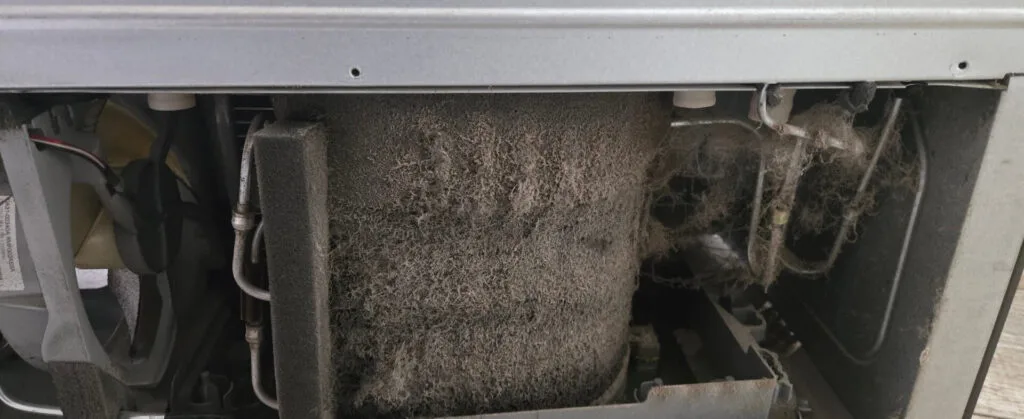
To keep food at sub-ambient temperatures, a residential refrigerator operates as a vapor-compression heat pump system. Its sole mechanical purpose is to extract thermal energy from inside the cabinet and dump that heat into the surrounding ambient air.
When your system’s exterior heat exchanger (the condenser coil) becomes insulated with dirt, dust, and pet hair, this entire thermal cycle collapses—resulting in elevated power bills, shortened component lifespan, and eventual compressor lockup.
Check out our full list of Appliance Troubleshooting Guides for step-by-step diagnostic assistance.
1. The Thermodynamics of Refrigeration: Moving Heat, Not Making Cold
Mechanical refrigeration relies on the Second Law of Thermodynamics, which states that heat naturally flows from a warmer body to a cooler body. To reverse this flow and pull heat out of an insulated cabinet, the refrigeration cycle uses a circulating refrigerant fluid undergoing continuous thermodynamic phase changes:
[ Evaporator Coil ]  --->  ( Absorbs Heat Inside Cabinet )
         │
         ▼
[ Compressor ]       --->  ( Increases Pressure & Heat )
         │
         ▼
[ Condenser Coil ]   --->  ( Rejects Heat Outside Cabinet )
         │
         ▼
[ Metering Device ] ---> ( Drops Pressure & Temperature )- Evaporator Coil (Heat Absorption): Low-pressure liquid refrigerant absorbs thermal energy from food items, causing the liquid to boil off into a superheated gas.
- Compressor (Work Input & Energy Concentration): The compressor draws in low-pressure gas and compresses it into a high-pressure, superheated vapor. This process dramatically raises the refrigerant’s saturation temperature well above ambient room air.
- Condenser Coil (Heat Rejection): The hot, high-pressure gas passes through the condenser coil sub-cooled matrix. As cooler ambient air passes over the fins, thermal energy transfers out of the coil into the room. This heat loss forces the refrigerant vapor to condense back into a high-pressure liquid.
- Metering Device (Capillary Tube / Expansion Valve): The liquid passes through a restriction, dropping its pressure and temperature sharply before re-entering the evaporator to repeat the thermodynamic loop.
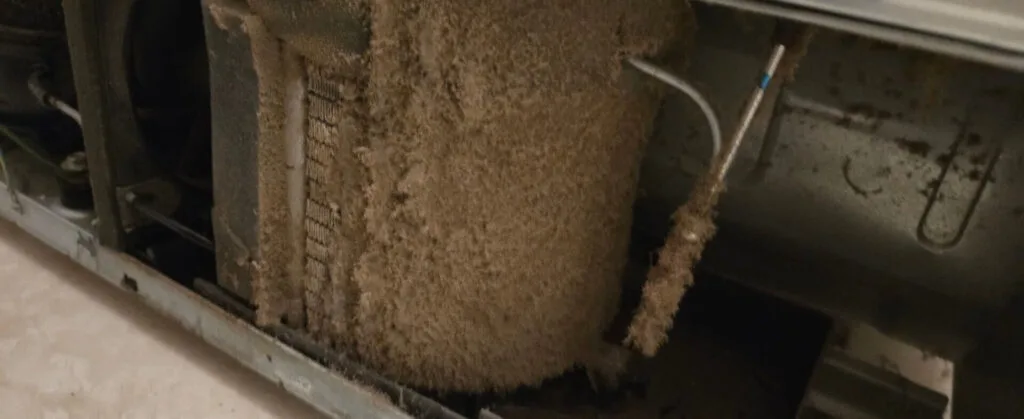
What Happens When Condenser Fins Are Dirty?
If the condenser coil is coated in dust and pet dander, it acts as a thermal blanket. The thermal resistance ***(R-value)***of the coil surface spikes, drastically reducing the heat transfer rate (Q). Because the refrigerant cannot reject its latent heat into the room, it stays hotter and at a higher pressure than designed, forcing the entire system to run inefficiently.
2. Elevated Head Pressure & The Cycle of Compressor Failure
When a condenser coil cannot reject heat properly, the high-side (head) pressure inside the sealed system skyrockets. This creates a destructive feedback loop inside the compressor:
- Increased Mechanical Stress: The compressor motor must work twice as hard to compress gas against abnormally high discharge head pressure.
- Overheating Winding Insulation: Excessive suction and discharge temperatures cook the compressor’s internal windings. Over time, high temperatures breakdown the dielectric insulation, leading to shorted windings or grounded motor failures.
- Thermal Overload Tripping: The compressor’s bimetal overload protector will continuously trip on high amperage or high temperature, leading to short-cycling and no-cooling complaints.
- Oil Breakdown & Acid Formation: High temperatures cause the compressor’s synthetic POE (polyolester) or mineral oil to thermally break down. The degraded oil carbonizes, forms sludge, clogs capillary tubes, and generates corrosive acids that destroy the internal mechanical assembly.
3. The “Cabinet Coffin” Effect: Zero Thermal Clearance Hazards
Modern home design trends frequently enclose refrigerators inside tight, custom-built cabinetry, leaving little to no air clearance around the top, sides, or rear of the unit. In the appliance repair field, we call this thermal trap “The Coffin.”
+------------------------------------------+
|            Solid Cabinet Top             |
|   +----------------------------------+   |
|   |                                  |   |
| T |          REFRIGERATOR            | T |  <-- Trapped Hot Air Pocket
| R |                                  | R |      (Re-circulates into Condenser)
| A |  [Condenser Fan] ---> [Coil]     | A |
| P |                                  | P |
|   +----------------------------------+   |
+------------------------------------------+
Why Cabinet Enclosures Double the Strain:
Most modern refrigerators feature forced-air bottom-mount condensers that pull air from the front kickplate, push it over the coil, and exhaust hot air underneath or behind the unit.
When enclosed in a tight cabinet cavity:
- Recirculated Heat: Exhausted heat has no chimney space to rise and dissipate. The hot air gets trapped behind and around the unit, continuously recirculating back into the condenser intake.
- Elevated Ambient Basement/Kitchen Delta: If the air entering the condenser is already 100°F to 110°F due to poor ventilation, the heat transfer temperature difference (ΔT) drops significantly, preventing proper refrigerant condensation.
- Double Insulation Risk: When a dirty condenser coil is paired with a tight cabinet enclosure, compressor failure rates double compared to free-standing installations.
4. Pet Hair & Cleaning Refrigerator Condenser Coils
For homes with dogs, cats, or shed-prone pets, condenser coils require far more frequent cleaning than standard manufacturer guidelines suggest.
       [ Pet Hair & Dander Ingestion ]
                     │
                     ▼
   [ Interlocking Fiber Matting Across Fins ]
                     │
                     ▼
      [ Total Airflow Restriction ]
                     │
                     ▼
[ 24/7 Continuous Running & High Energy Bills ]- Matting & Airflow Restriction: Pet hair acts as a primary filter mesh across condenser fins. Once hair catches on the fin edges, it traps fine dust and dander, quickly creating a solid, felt-like mat that completely chokes off airflow from the condenser fan motor.
- Fan Motor Burnout: The condenser fan motor experiences increased static pressure and thermal feedback, leading to premature fan motor bearing failure or open windings.
- Maintenance Interval Rule: While a home without pets can typically go 12 to 18 months between condenser cleanings, homes with pets should have their condenser coils cleaned every 6 months to maintain proper airflow and head pressures.
Here is a practical, step-by-step section you can add right before your Preventative Service heading. It gives homeowners clear DIY instructions while emphasizing safety and knowing when to call a pro.
How to Properly Clean Your Refrigerator Condenser Coils
Cleaning your condenser coils is a straightforward maintenance task, but following the correct sequence prevents damage to delicate aluminum fins and electrical components.
[ Power Disconnect ] ──> [ Access Coils ] ──> [ Vacuum & Brush ] ──> [ Clean Fan & Restore ]Step 1: Safety First (Disconnect Power)
Before working around any electrical component or moving fan blade, unplug the refrigerator from the wall outlet or trip the dedicated breaker in your main panel.
Step 2: Locate and Access the Coil Assembly
- Bottom-Mount / Kickplate Coils (Most Modern Units): Snap off the lower plastic toe-grille at the front bottom of the fridge.
- Rear-Mounted Coils: Pull the refrigerator forward out of its cabinet enclosure and remove the lower metal/cardboard rear access panel using a quarter-inch hex driver.
Step 3: Dry Vacuuming & Fin Brushing
- Use a Condenser Coil Brush: Insert a long, flexible, cylindrical condenser coil brush into the fin passages to loosen packed dust, pet hair, and dander.
- Vacuum with a Crevice Attachment: Run a vacuum cleaner narrow nozzle along the fins to suck out dislodged debris.
- Brush Parallel to the Fins: Always sweep vertically or parallel to the aluminum cooling fins. Brushing across the fins can bend them flat, choking off future airflow.
According to Whirlpool’s Condenser Coil Cleaning Guide, running a soft brush parallel along the coil fins removes stubborn dust buildup without damaging the delicate aluminum frame.
Step 4: Inspect the Condenser Fan Motor
While the access panel is off, inspect the condenser fan motor next to the coil. Spin the fan blade by hand to verify it rotates freely. If pet hair has wrapped around the motor shaft, clear it completely to prevent bearing lockup.
Step 5: Restore Power & Monitor
Reinstall the kickplate or rear access panel, push the unit back into position (ensuring you leave maximum clearance if inside a tight cabinet cavity), and plug the power cord back in.
Pro-Tip / Technician Warning: Never use liquid cleaners, high-pressure compressed air, or sharp tools on a refrigerator condenser. Compressed air can blast fine pet hair deeper into sealed cabinet channels, and sharp tools risk puncturing the copper or aluminum refrigerant tubing—leading to an expensive refrigerant leak.
Preventative Service & Professional Cleaning in Port St. Lucie
Keeping your refrigerator’s heat exchange loop clean is the single most effective way to extend its lifespan, reduce electricity consumption, and prevent catastrophic sealed system failures.
Need a professional condenser coil flush, airflow inspection, or sealed system diagnostic?
Ready to book? Call (772) 501-9870 or contact us.
Service areas: Port St. Lucie, Fort Pierce, Stuart, Palm City, and surrounding Treasure Coast communities.
FAQ · Family-owned Port St. Lucie
Frequently Asked Questions About Refrigerator & Ice Maker Repair
Why is my refrigerator running constantly and not cooling properly?
This is often caused by dirty condenser coils, which prevent the fridge from releasing heat. Our family-owned business can dispatch a technician today to clean your coils or diagnose any underlying mechanical issues, with the diagnostic fee waived if we perform the repair.
How often should I have my refrigerator condenser coils cleaned in Port St. Lucie?
We recommend professional cleaning at least once or twice a year, especially if you have pets. Dust and hair build up quickly in Florida's warm climate, straining your compressor. Our local team offers fast maintenance to keep your appliance running efficiently.
What does it cost to diagnose a refrigerator cooling problem?
We charge a reasonable diagnostic fee to troubleshoot your refrigerator's cooling issues. However, when you choose Port St. Lucie Appliance Repair to complete the job, we waive the diagnostic fee entirely, ensuring you only pay for the actual repair.