
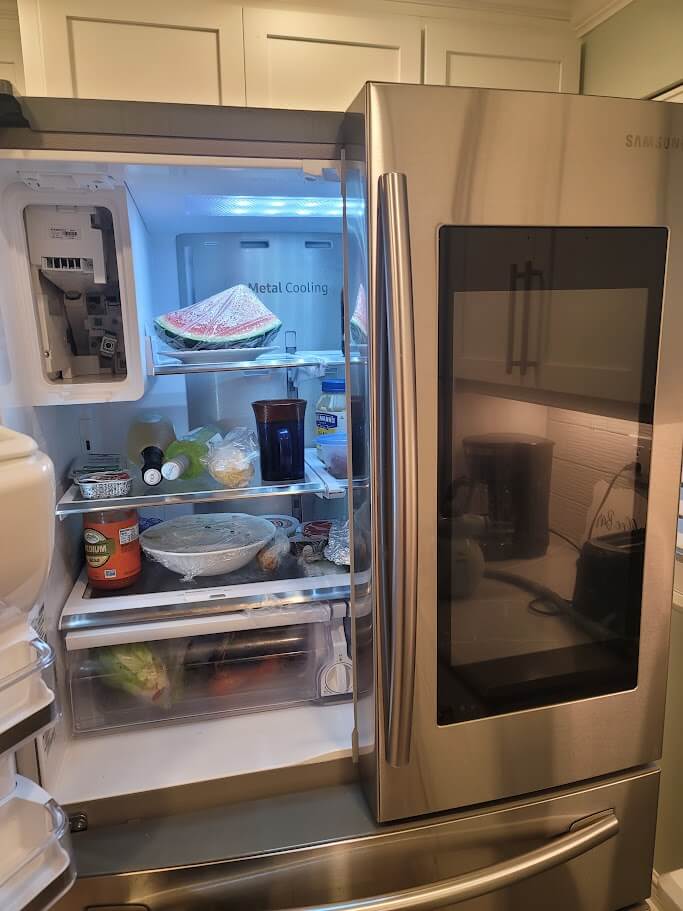
Why Samsung Fresh Food Ice Makers Freeze Up
Samsung ice maker freezing up? If you own a Samsung French door refrigerator, chances are high that you’ve experienced the frustrating “ice maker thaw” ritual. You press the door lever for ice and get nothing—or worse, you open the fresh food door to inspect the ice room, only to find the compartment latch completely frozen shut.
When you finally manage to thaw and release the bucket, you’ll often find a solid block of ice completely encasing the auger and ice tray. Many homeowners naturally try to chip away at the ice block with a knife or screwdriver, but this is extremely dangerous. A dedicated sub-zero refrigerant loop runs directly beneath and around the ice tray—puncturing this line will instantly destroy the cooling assembly and permanently damage your refrigerator. Hit it with a hairdryer, and you risk warping the delicate plastic cabinet liner.
As a master technician at Port St. Lucie Appliance Repair, I see this issue almost daily across Port St. Lucie. The truth is that a frozen ice maker isn’t just a minor glitch—it is usually the result of airflow physics, moisture intrusion, or specific factory manufacturing tolerances.
Below is an expert breakdown of how your Samsung fresh food ice maker works, why moisture gets trapped inside, how to interpret critical error codes, and what causes the infamous fill line spray.
How Samsung Fresh Food Ice Compartments Work
To understand why these ice makers freeze up, you first have to understand their unique engineering layout.
Unlike traditional top-freezer or side-by-side refrigerators where the ice maker sits directly inside the sub-zero freezer, modern Samsung French door models use a specialized fresh food ice box. While often referred to as an “in-door” dispenser system because the ice drops through the door chute, the ice maker itself is actually housed inside an insulated compartment built into the top-left corner of the main refrigerator cabinet.
This creates a unique engineering challenge: the main fresh food cabinet is kept at a comfortable 37°F to 38°F, while the isolated ice box inside it must stay sub-zero.
The Dedicated Cooling Loop
Because the surrounding fresh food area is above freezing, the ice room cannot rely on ambient cabinet air to freeze water. Instead:
- Dedicated Evaporator Coils: A secondary cooling loop (or dedicated secondary evaporator lines) delivers sub-zero refrigerant directly to the ice room casing.
- Ice Room Fan: A small internal fan circulates freezing air across the ice tray to quickly turn liquid water into solid ice cubes.
- The Challenge: You essentially have a sub-zero freezer box sitting inside a warm, humid 38°F room. If the seal between those two environments fails by even a fraction of a millimeter, thermal trouble begins instantly.
Common Reasons Your Samsung Ice Maker Freezing Up Occurs
When your Samsung ice maker freezing up becomes a repeating problem, understanding the exact mechanical failures causing the freeze-up is the first step toward a permanent fix. A frozen Samsung fresh food ice room is almost never an isolated fluke—it is a progressive issue where moisture intrusion, broken cabinet seals, air leaks, or water line misalignments cause ice to build up until the entire assembly jams.
The Root Cause: Warm Cabinet Moisture & Air Leaks
In Florida’s high humidity, air intrusion is the primary enemy of Samsung ice makers.
When you open your refrigerator door, warm, humid air enters the fresh food cabinet. If the ice room is not 100% air-tight, that warm, moisture-laden air gets drawn directly into the sub-zero ice compartment.
The Frost-to-Ice Cascade
- Condensation: As warm, humid air contacts the sub-zero metal cooling coil and ice tray inside the ice box, moisture instantly condenses into liquid water droplets.
- Frost Formation: That condensation freezes into fine white frost, coating the walls, the auger motor shaft, and the air vents.
- Solid Ice Block: Over several days, repeated door openings feed more humidity into the box. The frost layers melt slightly during defrost cycles and refreeze into a solid, clear block of ice that completely locks up the ice bucket, auger motor, and dispenser chute.
Where Does the Air Leak In?
- Deteriorated Gaskets: The rubber seal around the ice room door or the front dispenser chute flap loses elasticity or warps over time.
- Cabinet Sealing Gaps: Factory sealant around the back where the refrigerant lines enter the ice box can shrink or develop microscopic gaps, allowing cabinet air to bypass the outer casing entirely.
Diagnostic Error Codes: Error 39 vs. Error 40
When a Samsung ice maker stops producing ice or the display panel starts flashing, reading the internal error codes gives us a clear roadmap for the repair. Two of the most common codes involved in this failure are Error 39 and Error 40.
| Error Code | Primary Cause | Common Fix |
| Error 39 (39 E) | Ice Maker Assembly / Sensor Fault | Replace Ice Maker |
| Error 40 (40 E) | Ice Box Fan Feedback Missing | Clear Ice / Seal Air |
1. Error Code 39 (Ice Maker Function Error)
- What It Means: The main control board has lost communication with the ice maker assembly, or the internal temperature sensor (thermistor) / ejector arm switches have failed.
- The Reality: When ice encases the tray mechanism, the ejector arm motor burns out trying to harvest frozen cubes, or the internal thermistor fails due to moisture shorting out the wiring harness.
- The Solution: Error 39 almost always requires replacing the entire ice maker kit assembly with updated OEM components.
2. Error Code 40 (Ice Box Fan Error)
- What It Means: The main control board is not receiving a speed feedback signal from the ice room fan motor.
- The Reality: Unlike Error 39, Error 40 does not usually mean the fan motor itself has physically burned out! In 90% of cases, moisture intrusion has created a wall of ice that has physically seized the fan blades, preventing them from spinning.
- The Solution: Thawing the ice, thoroughly drying the housing, clearing the obstruction, and properly resealing the ice box to prevent future moisture intrusion will often restore the fan to full operation without needing a motor replacement.
Factory Defect: Over-Extended Ice Water Fill Lines
Beyond air leaks, there is another major mechanical failure specific to certain Samsung French door models: an improperly factory-positioned fill tube.
During the manufacturing process on specific assembly runs, the water fill line supplying the ice maker was pushed too far into the cabinet housing.
How This Causes Catastrophic Freezing:
- Misaligned Water Stream: When the water inlet valve opens to fill the ice tray, the over-extended fill line doesn’t align cleanly with the tray cup.
- Cabinet Spray: Instead of a controlled stream filling the tray, high water pressure causes water to spray and splash all over the internal walls of the ice room, the auger housing, and the electrical harness.
- Instant Solid Freeze: Liquid water lands directly on sub-zero metal components, freezing into a thick shell of ice within minutes.
- Water Leaks: Excess water cascades out of the front of the ice room door, dripping down the inside of the fresh food door and pooling under your vegetable crisper drawers.
Fixing this requires a master technician to inspect the physical penetration depth of the fill line, trim or re-position the tube assembly, and calibrate the water line fill volume at the main valve.
Why Hairdryers and DIY Hacks Don’t Last
Using a hairdryer or heat gun to thaw out your Samsung ice maker might give you ice for a week or two, but it does not fix the underlying cause:
- It does not replace distorted air seals.
- It does not fix an over-extended water fill tube.
- Heat guns can easily warp the delicate plastic liner of your refrigerator cabinet, permanently damaging the appliance.
Expert Samsung Ice Maker Repair in Port St. Lucie
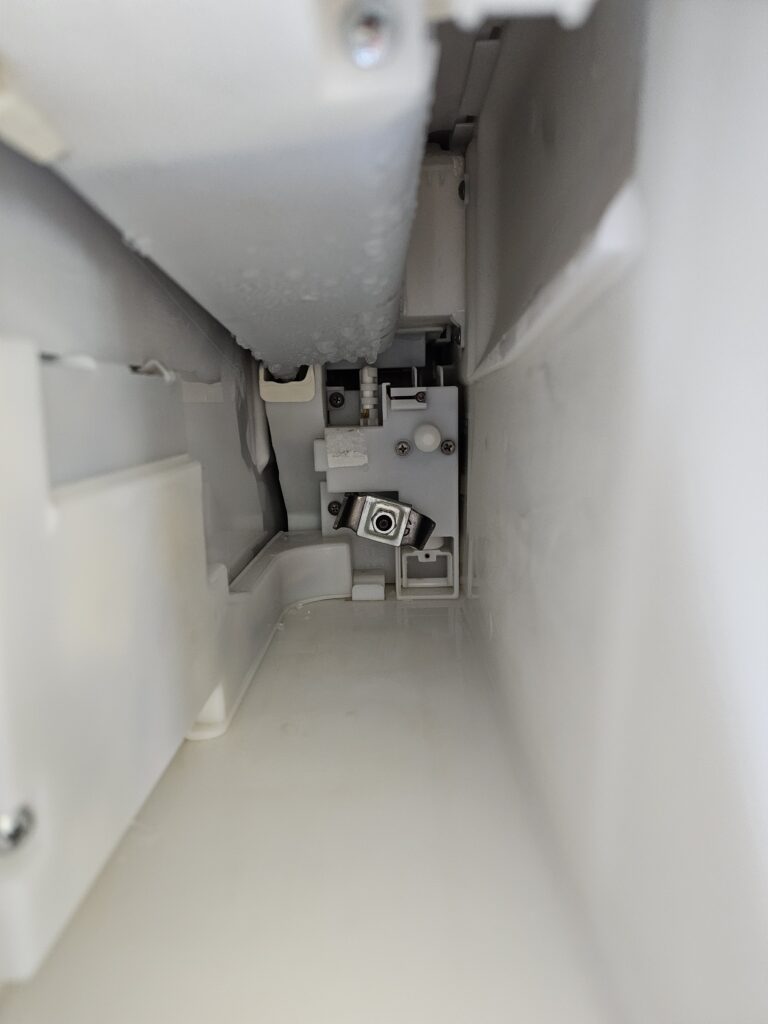
When dealing with a samsung ice maker freezing up, trying to clear the ice yourself with hairdryers or sharp tools only treats the temporary symptom while risking permanent damage to the delicate cooling lines. Because a samsung ice maker freezing up is ultimately caused by compromised air seals, moisture infiltration, or improper water line positioning, a lasting solution requires addressing these underlying mechanical failures head-on. Professional restoration of the sealing paths and updating damaged components will ensure your fresh food ice compartment runs efficiently without turning back into a solid block of ice.
Fixing a Samsung ice maker permanently requires an updated service procedure—including installing upgraded OEM service kits, correcting water line alignment, replacing damaged seals, and applying specialized marine-grade sealant to critical cabinet air paths.
If your Samsung refrigerator ice maker is frozen solid, grinding, displaying Error 39/40, or leaking water inside your fridge, let a certified professional diagnose and repair it correctly the first time. At Port St. Lucie Appliance Repair, we specialize in these complex fresh-food cooling systems.
Schedule Your Refrigerator Repair Today or call us directly at (772) 501-9870.